
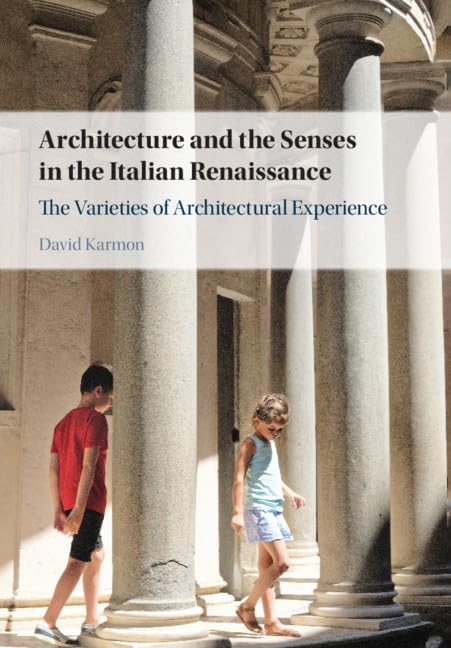
Description
Architecture and the Senses in the Italian Renaissance examines how Renaissance architects deliberately crafted spaces to appeal to human perception beyond mere visual aesthetics. David Karmon argues that sensory experience—including touch, sound, smell, and taste alongside sight—was fundamental to Renaissance architectural design and theory.
Through detailed analysis of specific buildings and theoretical texts, Karmon demonstrates how architects like Brunelleschi and Alberti considered how materials, proportions, light, acoustics, and spatial sequences would be experienced by the human body moving through space. This multisensory approach challenges conventional interpretations of Renaissance architecture focused solely on visual harmony and mathematical proportion.
The book integrates architectural history with sensory studies, offering fresh perspectives on Renaissance masterpieces and deepening our understanding of how Renaissance thinkers conceptualized the relationship between buildings and human experience.




Reviews
There are no reviews yet.