
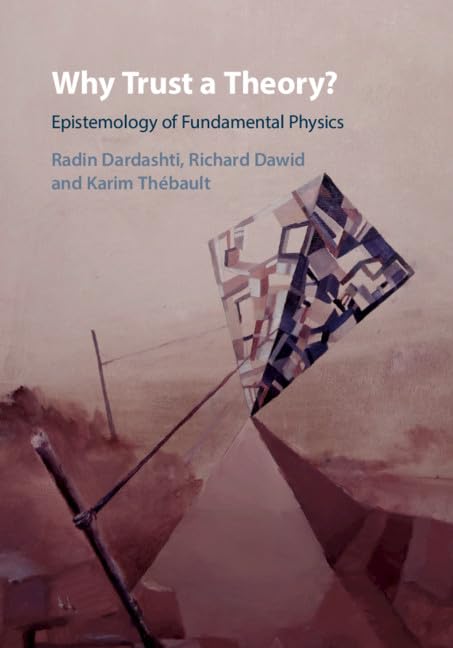
Description
This volume addresses a central challenge in contemporary fundamental physics: how can we rationally evaluate theories about the universe’s basic structure when direct empirical testing is impossible or prohibitively expensive?
Written by leading philosophers and physicists, the book investigates the epistemological foundations underlying modern theoretical physics. It examines how scientists assess theories like string theory, inflation models, and quantum gravity frameworks when they operate beyond the reach of current experimental capabilities.
The authors analyze alternative justification strategies, including mathematical elegance, internal consistency, explanatory power, and unification potential. They address critical questions about the nature of scientific progress, the role of aesthetic principles in theory selection, and the relationship between empirical data and theoretical speculation.
Essential reading for anyone interested in philosophy of science, physics methodology, or the future direction of fundamental physics research, this work bridges the gap between scientific practice and philosophical theory.

Reviews
There are no reviews yet.