
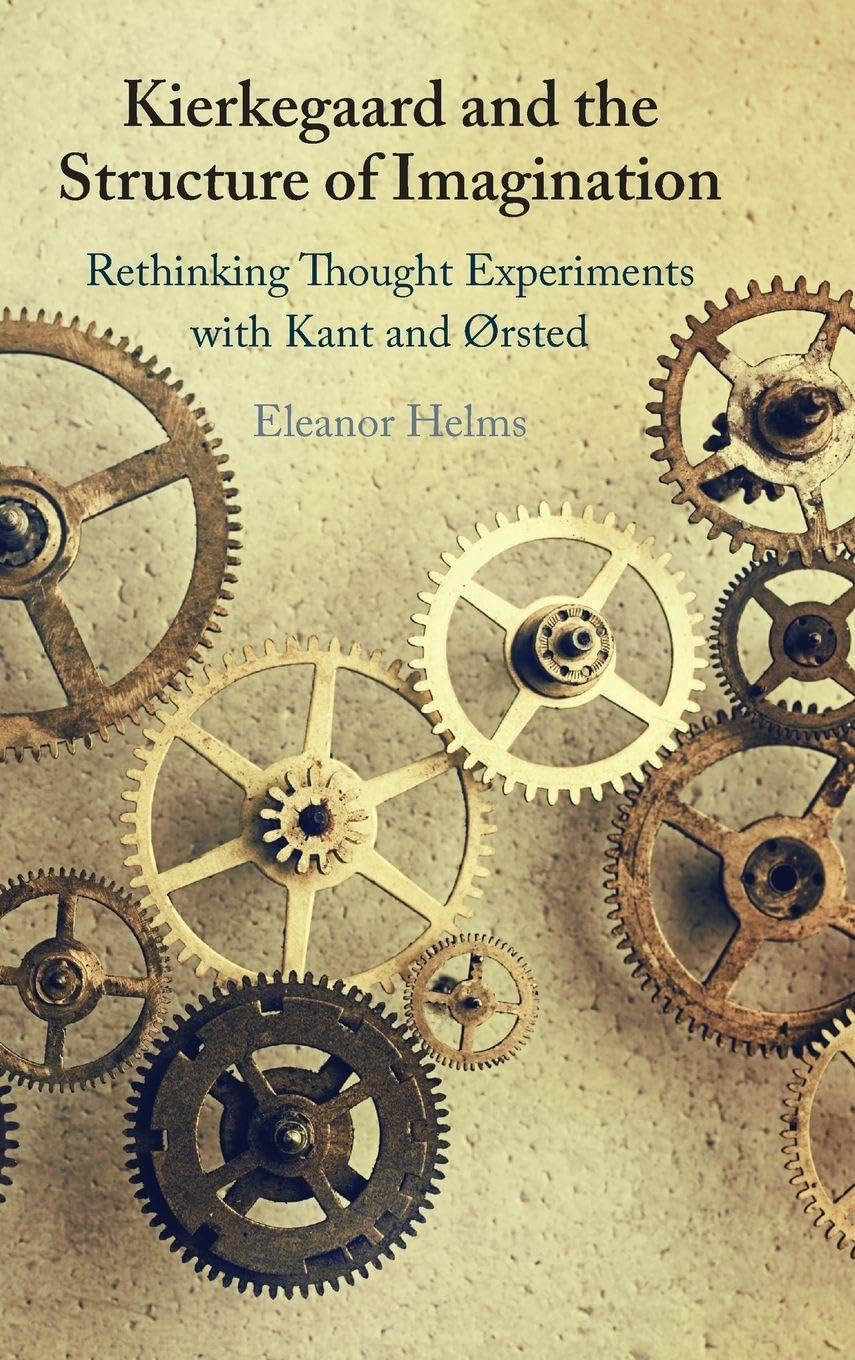
Description
Eleanor Helms’ groundbreaking study investigates the central role of imagination in Søren Kierkegaard’s philosophical system, reconsidering how thought experiments function as tools for philosophical inquiry. By engaging with Kant’s critical philosophy and Hans Christian Ørsted’s scientific methodology, Helms demonstrates the sophisticated imaginative architectures underlying Kierkegaard’s existential thought.
The book challenges conventional interpretations of Kierkegaard by emphasizing imagination not as mere fancy but as a constitutive element of philosophical understanding. Helms reveals how thought experiments operate within Kierkegaard’s pseudonymous works to generate existential insights and ethical awareness. Through careful comparative analysis, she situates Kierkegaard within broader European intellectual currents, showing how his approach to imagination both builds upon and diverges from Enlightenment rationalism.
Essential for scholars of Kierkegaard, phenomenology, and the history of philosophy, this work offers new perspectives on how imaginative thinking structures philosophical innovation and existential understanding.




Reviews
There are no reviews yet.