
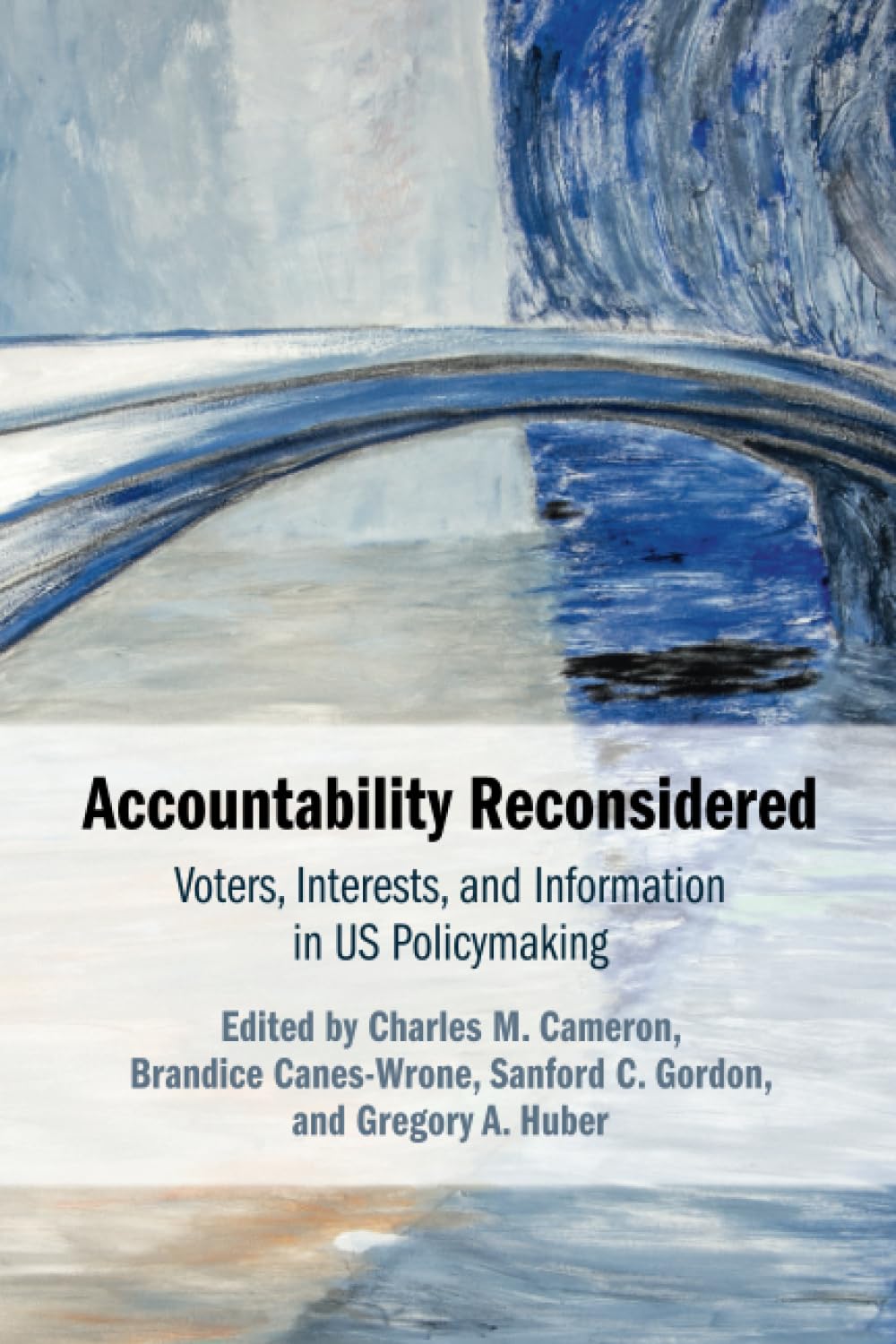
Description
Accountability Reconsidered provides a comprehensive analysis of how accountability functions in US policymaking, moving beyond simplistic models of voter behavior and political responsiveness. The authors investigate the intricate relationships between voters, interest groups, and information flows that determine whether elected officials face consequences for their policy decisions.
Through empirical research and theoretical analysis, the book explores how voters acquire and use political information, how interest groups influence the political process, and how these factors combine to create (or fail to create) meaningful accountability. The work challenges traditional assumptions about democratic governance and offers insights into why elected officials sometimes respond to constituent preferences and sometimes do not.
This interdisciplinary study draws on political science, economics, and public choice theory to explain the real mechanisms of democratic accountability, providing valuable perspectives for scholars, policymakers, and anyone interested in how American democracy actually functions.



Reviews
There are no reviews yet.