
Description
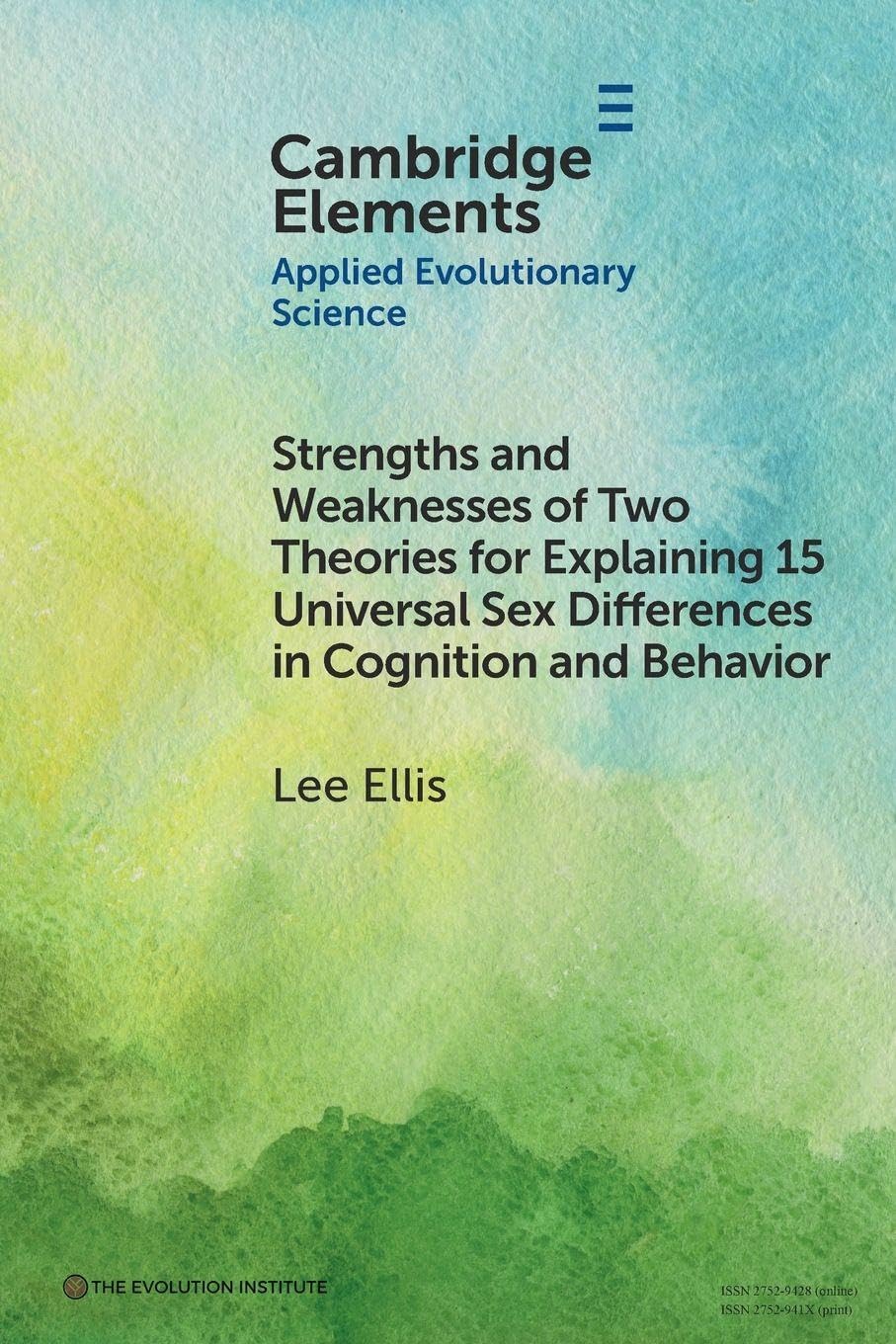
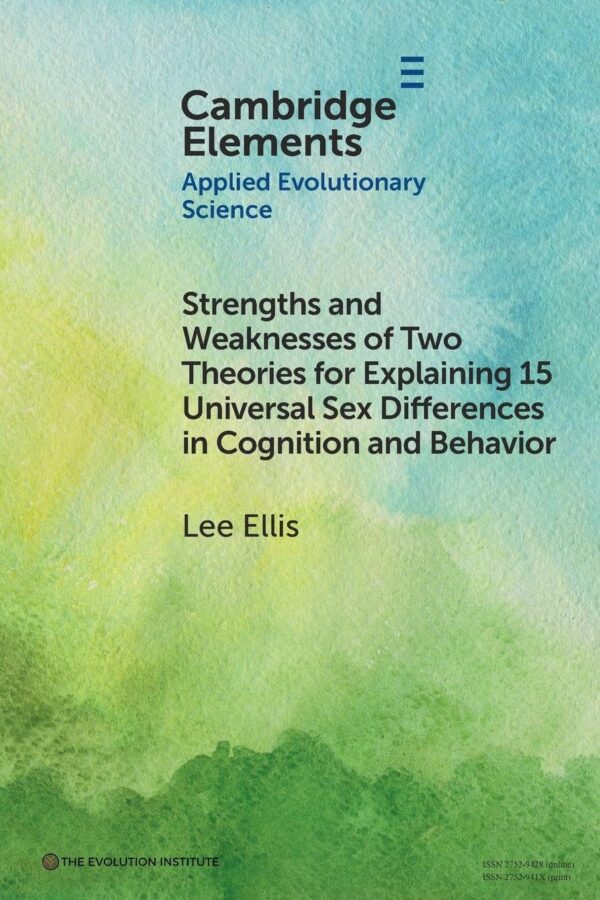
This Elements in Applied Evolutionary Science volume provides a comprehensive analysis of two competing evolutionary theories that attempt to explain universal sex differences observed across human cognition and behavior. The author, Lee Ellis, carefully evaluates the empirical evidence supporting and challenging each theoretical framework.
The book presents a detailed examination of how these theories account for documented sex differences in areas such as spatial reasoning, mathematical ability, aggression, risk-taking, and social behavior. Ellis critically assesses the explanatory power of both theories, identifying their respective strengths in addressing various phenomena while also highlighting their limitations and weaknesses.
Through rigorous comparison of theoretical predictions against empirical data, this work offers scholars and students in evolutionary psychology, cognitive science, and behavioral genetics a balanced perspective on competing explanations for sex-differentiated traits. The analysis contributes to ongoing debates about the relative contributions of evolutionary mechanisms in shaping human psychological and behavioral sex differences.




Reviews
There are no reviews yet.