
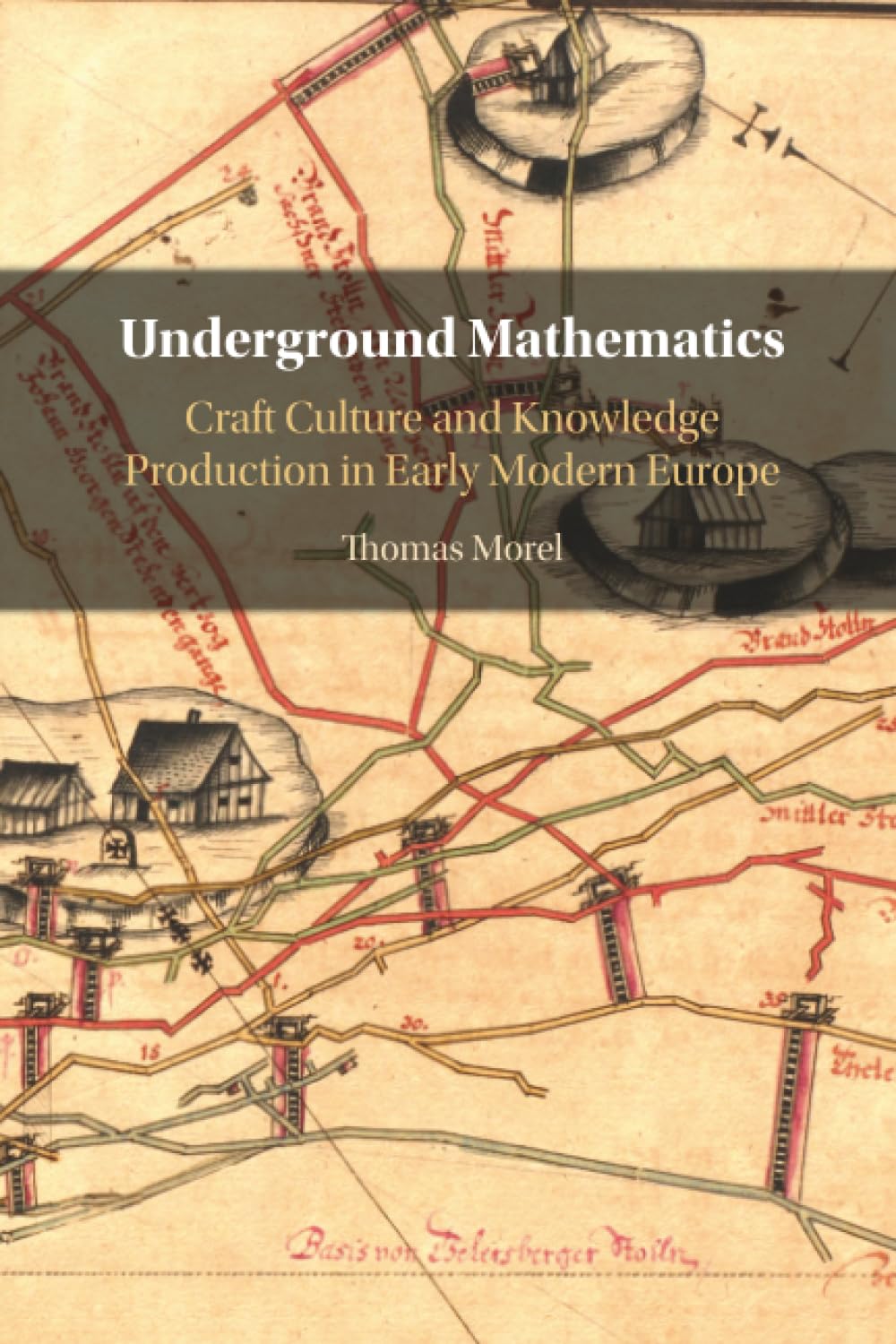
Description
Underground Mathematics examines the crucial but often overlooked role of craftspeople and artisans in the development of scientific knowledge during the early modern period. Thomas Morel investigates how practical expertise in metallurgy, printing, engineering, and other trades contributed to mathematical and scientific innovation across Europe.
Rather than tracing science’s history through famous philosophers and academics alone, this work uncovers the networks of makers and practitioners whose tacit knowledge and experiential understanding proved essential to intellectual progress. Morel demonstrates how craft culture intersected with emerging scientific methodologies, challenging traditional narratives that separate manual labor from intellectual work.
By examining guild records, technical treatises, and material evidence, the author reveals how knowledge production operated in workshops, laboratories, and printing houses. This groundbreaking study reshapes our understanding of early modern science’s social foundations and the diverse communities that built the knowledge systems we inherit today.




Reviews
There are no reviews yet.