

Description
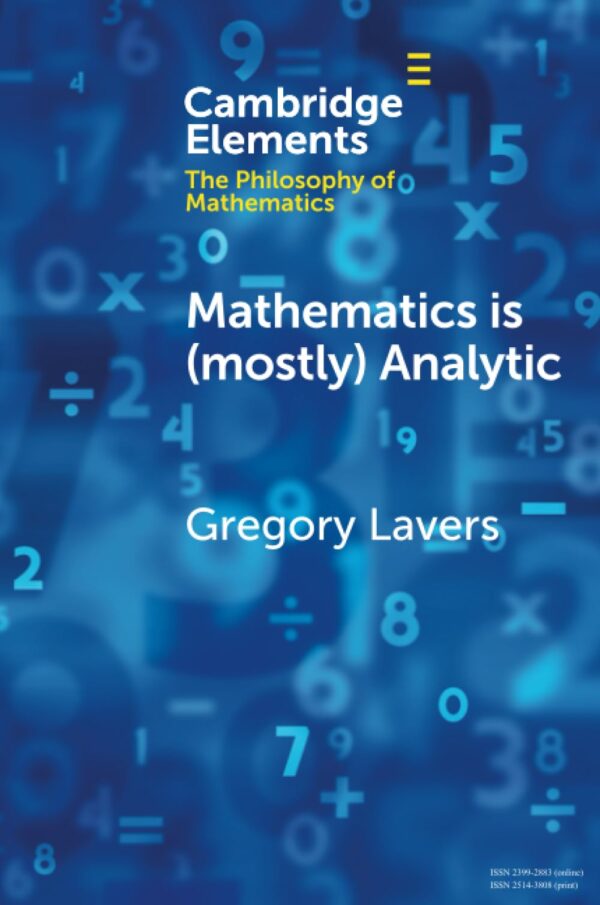
Gregory Lavers presents a compelling argument that mathematics is fundamentally analytic in nature, challenging prevalent assumptions about mathematical reality and knowledge. This element in the philosophy of mathematics explores how mathematical truths derive from logical principles and linguistic conventions rather than existing independently in abstract realms.
The book examines core questions in philosophy of mathematics: What is the nature of mathematical objects? How do we know mathematical truths? Are mathematical statements discovered or invented? Lavers demonstrates that by treating mathematics as an analytic enterprise, we can resolve longstanding philosophical puzzles about mathematical existence and certainty.
Through careful logical analysis, the author argues against platonism and other realist positions, offering an alternative framework that reconciles mathematical practice with empiricist epistemology. This work is essential reading for philosophers of mathematics and anyone interested in the foundations of mathematical thought.



Reviews
There are no reviews yet.