
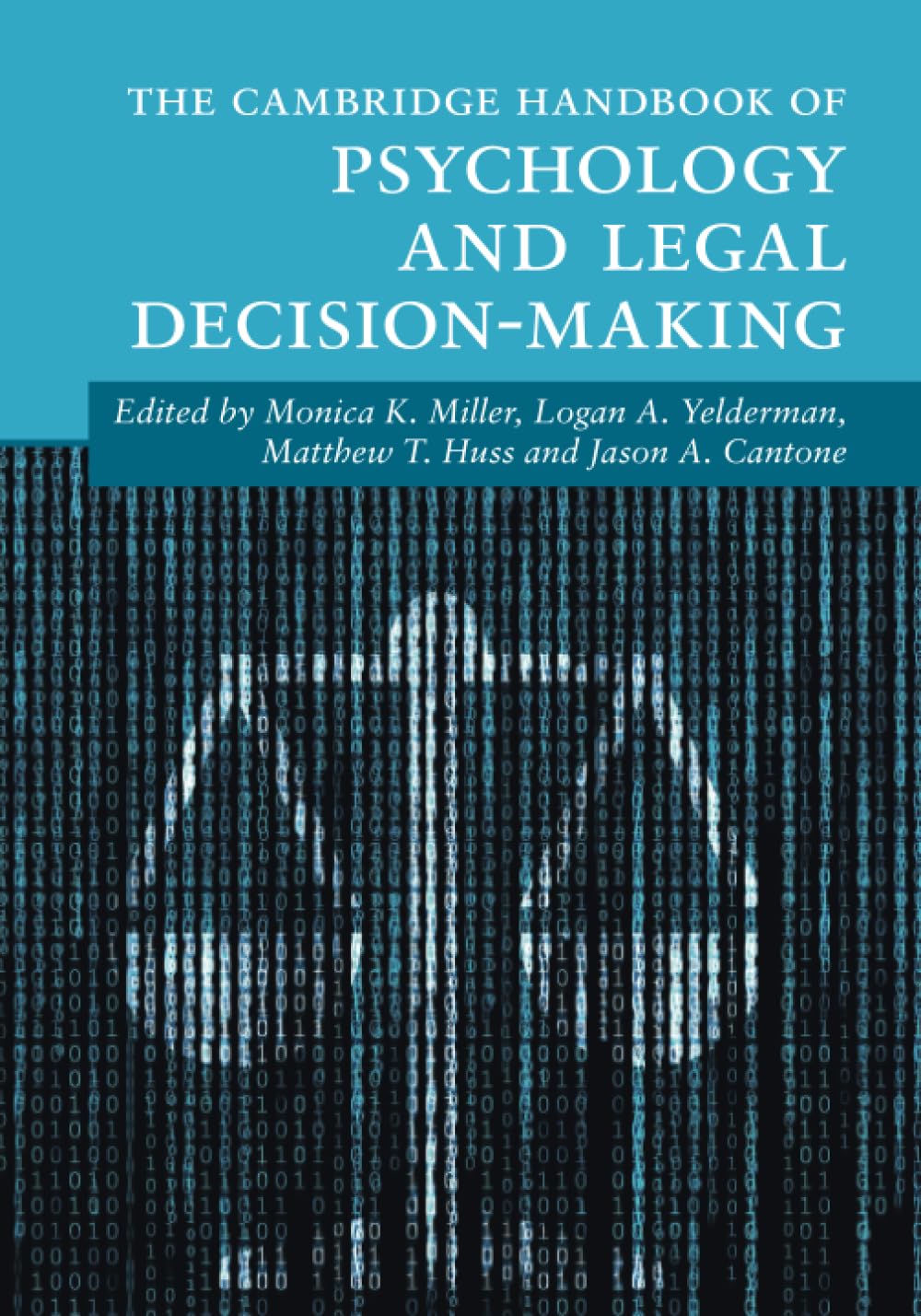
Description
The Cambridge Handbook of Psychology and Legal Decision-Making provides an in-depth exploration of how psychological research informs and shapes legal proceedings. This comprehensive reference examines the cognitive biases, behavioral patterns, and mental processes that influence judges, jurors, attorneys, and other legal professionals.
The handbook covers critical topics including jury selection and deliberation, eyewitness testimony reliability, forensic psychology, and the psychological factors affecting verdict outcomes. Expert contributors analyze how psychological principles can improve legal decision-making and enhance the fairness of the justice system.
Designed for psychology students, legal professionals, and researchers, this handbook bridges the gap between psychological science and practical legal applications. It serves as an essential resource for understanding how human cognition, emotion, and perception shape legal outcomes and courtroom dynamics.






Reviews
There are no reviews yet.