
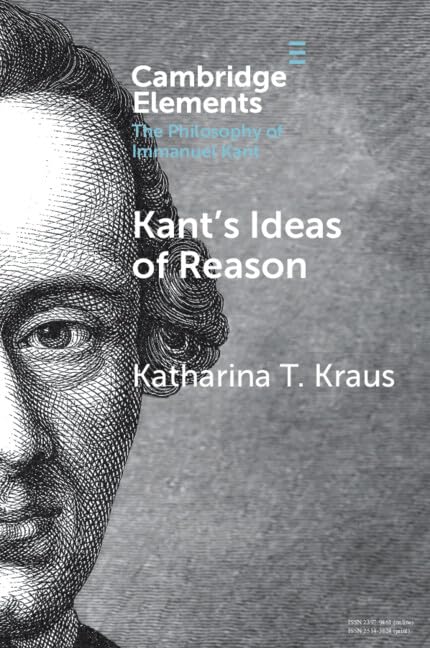
Description
Katharina Kraus provides a comprehensive analysis of Immanuel Kant’s conception of reason and the ideas it produces. The work examines how Kant’s critical philosophy addresses the fundamental question of what reason is and how it operates as a cognitive faculty.
The book explores the distinction between theoretical and practical reason, analyzing how each generates its own set of transcendental ideas. Kraus carefully reconstructs Kant’s account of reason’s regulative role in structuring human knowledge and moral experience. She addresses central concerns about the validity and application of reason’s ideas, particularly regarding the unconditioned and systematic unity of knowledge.
This Element clarifies key concepts in Kantian philosophy, including the nature of transcendental ideas, the structure of rational inference, and reason’s function in bridging the gap between sensibility and understanding. The work is essential for scholars seeking to understand Kant’s Critical philosophy and its implications for epistemology and metaphysics.



Reviews
There are no reviews yet.