Description
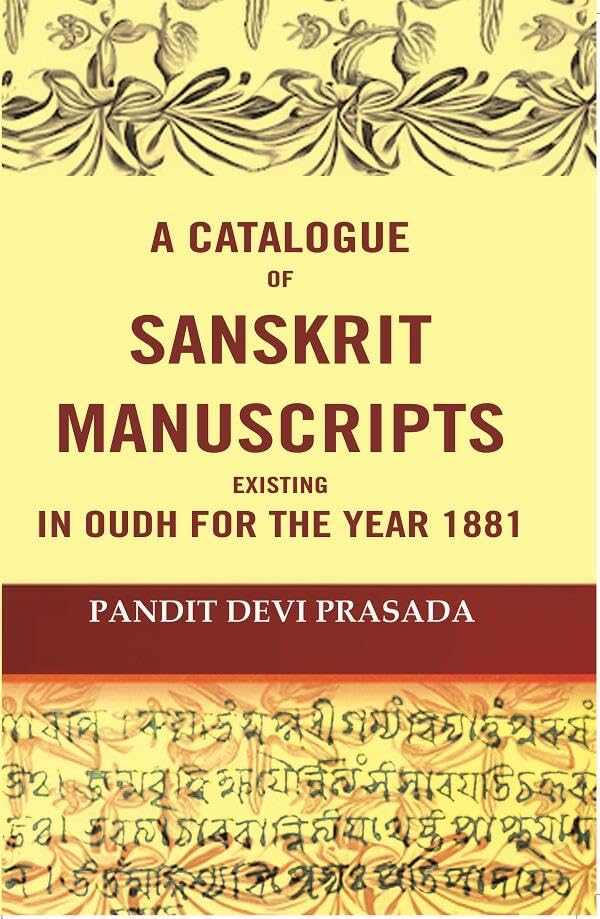
This is an invaluable scholarly resource documenting Sanskrit manuscripts preserved in Oudh (present-day Uttar Pradesh) during 1881. Originally compiled as a historical archive, this catalogue serves modern researchers, Sanskrit scholars, and academic institutions studying Indian textual heritage. Each entry provides detailed bibliographic information about rare manuscripts, making it essential for anyone researching classical Indian literature, philosophy, or manuscript preservation. Whether you’re an academic, librarian, or serious manuscript collector, this period document bridges 19th-century scholarship with contemporary academic inquiry. A foundational text for understanding the scope and significance of Sanskrit literary traditions in historical Uttar Pradesh.
- Reading age: 12 years and up
- Print length: 139 pages
- Language: English
- Dimensions: 21.59 x 13.34 x 0.97 cm
- Publisher: Gyan Publishing House
- Publication date: 1 January 2024
- ISBN-10: 9364331915
- ISBN-13: 978-9364331913
Frequently Asked Questions
Who should buy this Sanskrit manuscripts catalogue?
This book is ideal for Sanskrit scholars, academic researchers, university libraries, manuscript collectors, and historians studying classical Indian literature and textual heritage. Anyone researching 19th-century Oudh or Sanskrit manuscript preservation will find this catalogue indispensable for research and reference.
What information does the Oudh manuscripts catalogue contain?
The catalogue provides detailed bibliographic entries for Sanskrit manuscripts that existed in Oudh during 1881, including manuscript descriptions, titles, and historical documentation. It serves as a comprehensive reference for understanding the scope of Sanskrit literary preservation in historical Uttar Pradesh.
Is this book useful for Indian history research?
Yes, this catalogue is excellent for researching 19th-century Indian history, particularly the cultural and intellectual heritage of Uttar Pradesh. It documents important aspects of how Sanskrit knowledge and texts were preserved during the colonial period in Oudh.
Can I use this as a reference for academic work?
Absolutely. Academic institutions, researchers, and students studying Sanskrit literature, Indian history, or manuscript studies regularly cite historical catalogues like this for their academic papers, theses, and scholarly projects.
What makes this 1881 catalogue valuable today?
This historical catalogue provides a snapshot of manuscript collections from over 140 years ago, making it invaluable for tracking textual history, understanding manuscript circulation patterns, and researching the state of Sanskrit preservation during the colonial era in Oudh.