
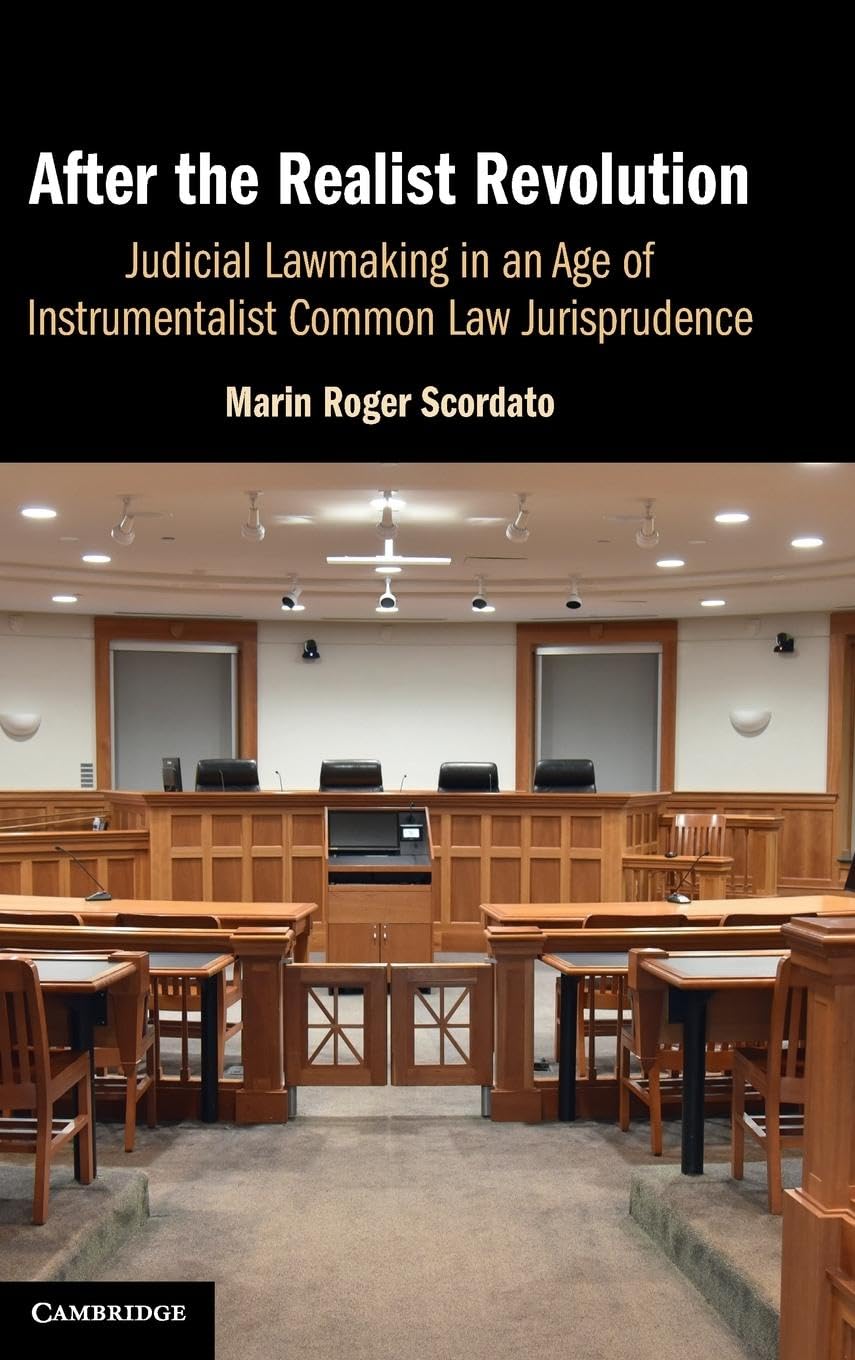
Description
After the Realist Revolution provides a comprehensive analysis of judicial lawmaking in contemporary common law jurisdictions. Marin Roger Scordato argues that following the legal realist movement, courts have increasingly adopted an instrumentalist approach to jurisprudence, where law is viewed as a tool to achieve specific social and policy objectives.
The work traces the intellectual history of legal realism and its profound impact on modern judicial practice. Scordato examines how judges now explicitly consider policy implications, practical consequences, and societal goals when interpreting and creating law. This shift represents a fundamental departure from formalist approaches to legal reasoning.
The book addresses key questions about the nature of judicial authority, the legitimacy of lawmaking by courts, and the appropriate limits of judicial discretion in an instrumentalist legal system. It offers valuable insights for legal scholars, judges, and practitioners seeking to understand the contemporary role of courts in shaping law and policy.





Reviews
There are no reviews yet.