
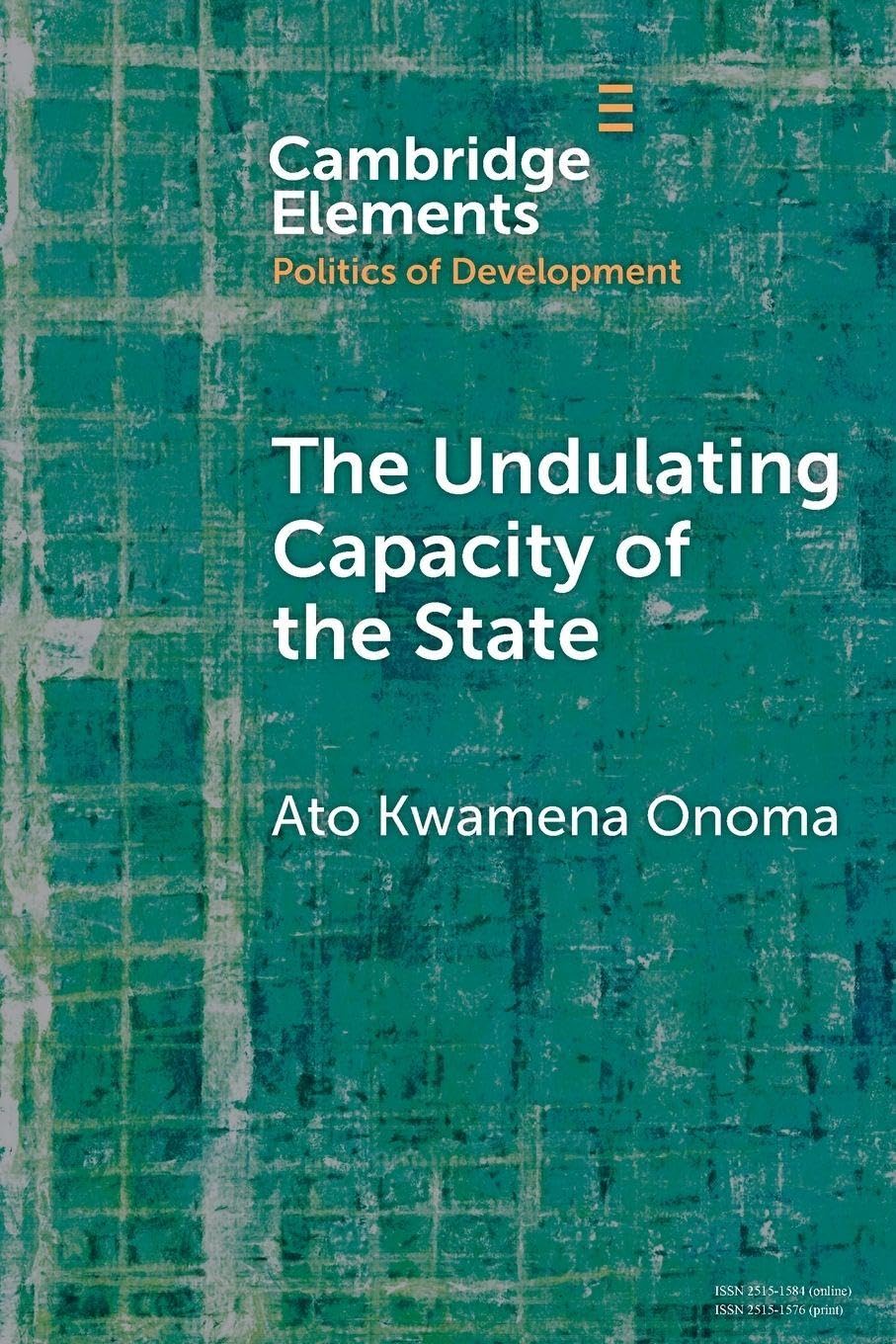
Description
The Undulating Capacity of the State investigates a crucial paradox in African urban development: why do states with limited institutional capacity sometimes successfully implement infrastructure projects? Ato Kwamena Onoma argues that autochthony—claims based on indigenous or native status—significantly shapes infrastructure development outcomes in African cities.
Through careful analysis of multiple case studies, Onoma demonstrates how state capacity fluctuates based on political negotiations around belonging and citizenship. The book reveals that infrastructure projects succeed or fail not merely due to technical or financial constraints, but through complex interactions between state actors, local populations claiming autochthonous rights, and development initiatives. This framework challenges conventional understandings of state capacity and offers new insights into the political economy of urban development in Africa.
Part of the Elements in the Politics of Development series, this work contributes valuable theoretical and empirical perspectives for scholars of African politics, urban studies, and development studies.





Reviews
There are no reviews yet.