
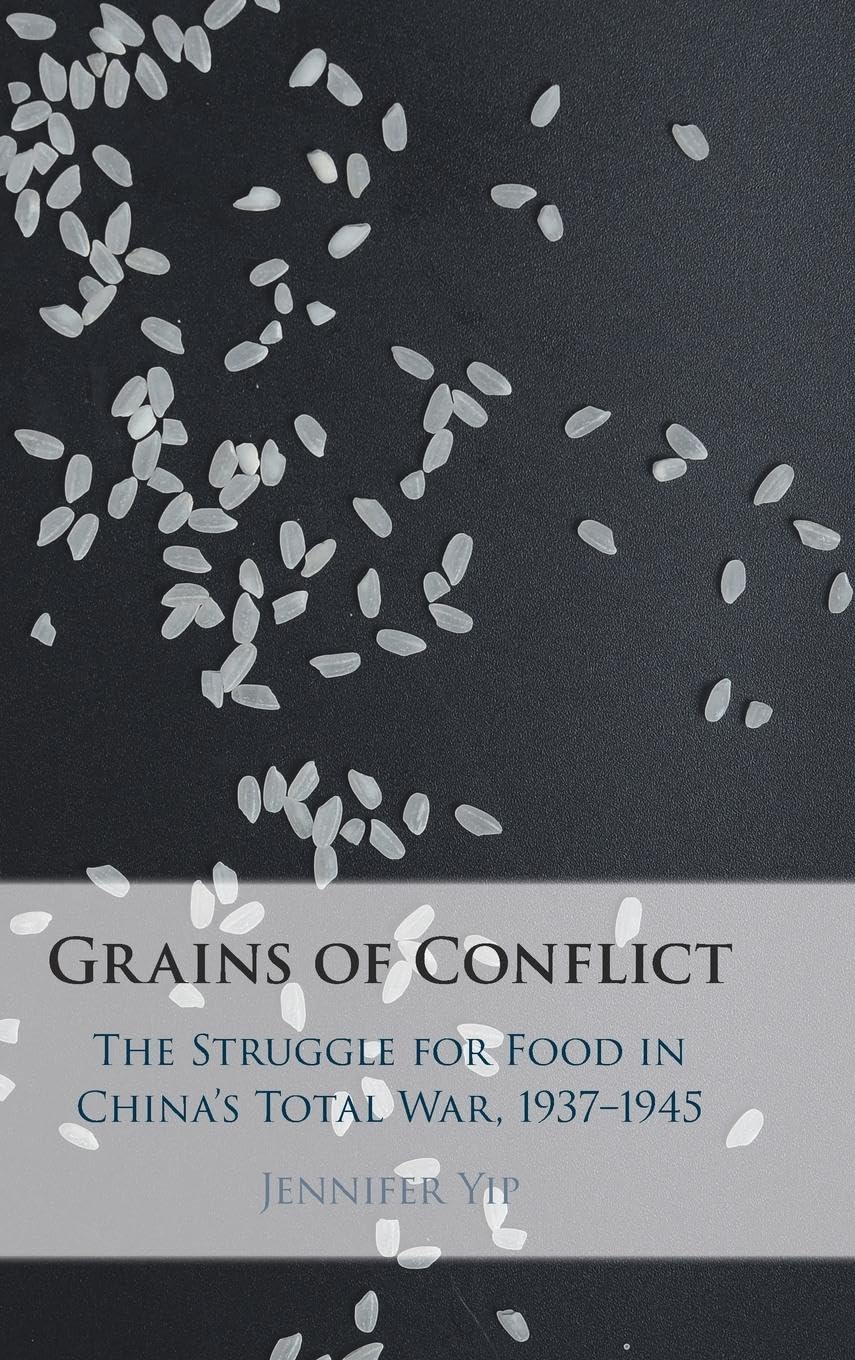
Description
Grains of Conflict provides a groundbreaking analysis of food’s critical role in China’s total war effort from 1937 to 1945. Rather than focusing solely on military campaigns, Jennifer Yip demonstrates how grain production, distribution, and scarcity fundamentally influenced the outcome of the Second Sino-Japanese War.
The book explores how agricultural disruption affected military strategy, civilian survival, and political legitimacy. Yip examines the competing demands placed on China’s food supply by the military, civilian populations, and various regional powers. Through detailed research, she reveals how famine conditions created social instability and shaped popular responses to both Japanese occupation and Chinese governance.
This work challenges conventional narratives of total war by centering the material conditions of food production and consumption. It illuminates how ordinary people experienced wartime scarcity and how governments attempted to manage agricultural crises during unprecedented conflict. Essential for understanding modern Chinese history and the human dimensions of total war.
Reviews
There are no reviews yet.