
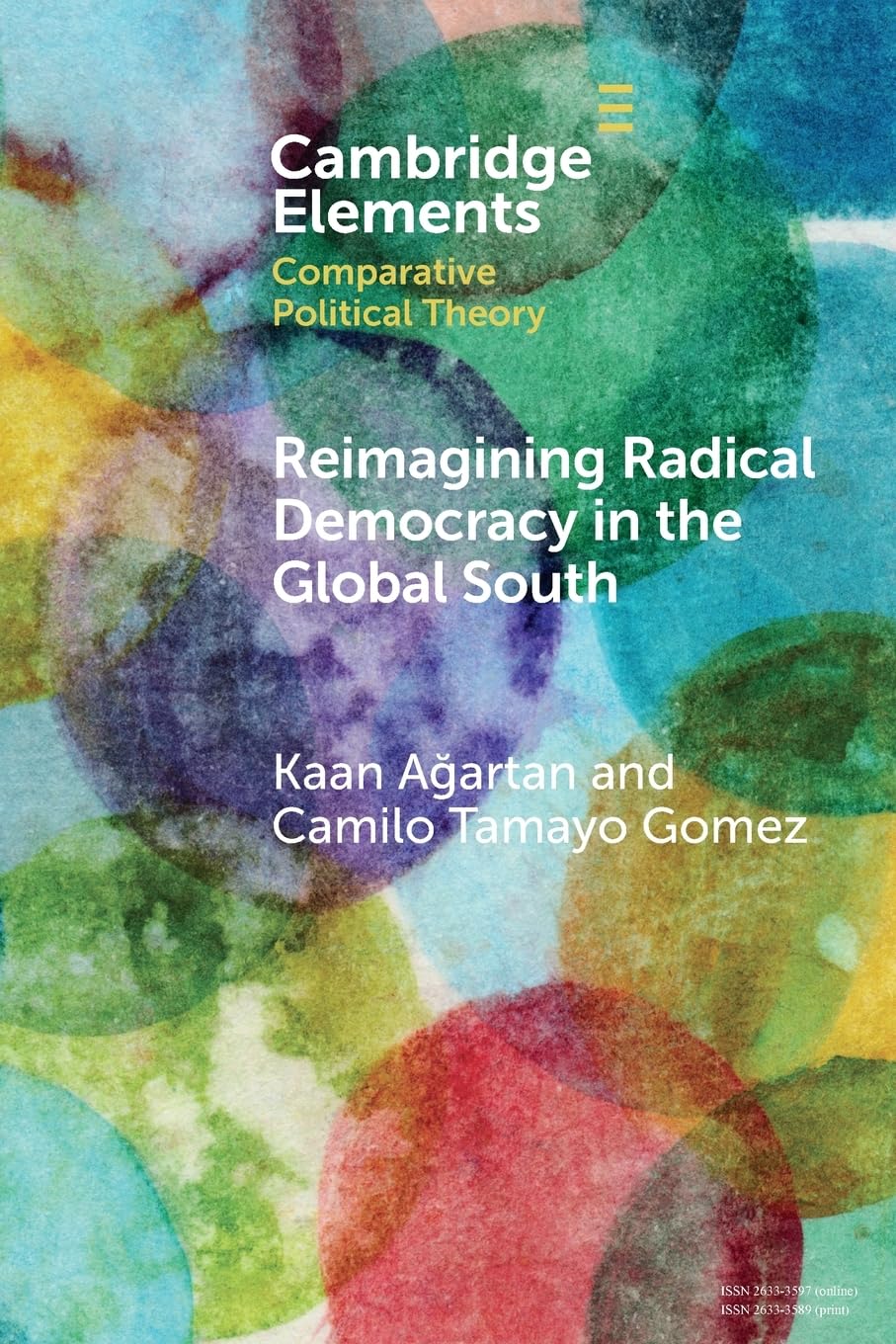
Description
Reimagining Radical Democracy in the Global South offers a comparative political analysis of democratic movements and innovations in Colombia and Türkiye. Through detailed case studies, Camilo Tamayo Gomez and Kaan Agartan examine how communities in the Global South are developing alternative approaches to democracy that move beyond Western liberal frameworks.
The book explores grassroots movements, participatory institutions, and radical democratic practices that challenge conventional understandings of political engagement and representation. By analyzing specific examples from both nations, the authors identify emerging paradigms that prioritize direct participation, social inclusion, and transformative political change. This work contributes to comparative political theory by demonstrating how the Global South generates innovative democratic models responsive to local contexts and histories.
Published by Cambridge University Press as part of the Elements in Comparative Political Theory series, this volume provides scholars and students with essential insights into contemporary democracy beyond traditional institutional frameworks.



Reviews
There are no reviews yet.