Description
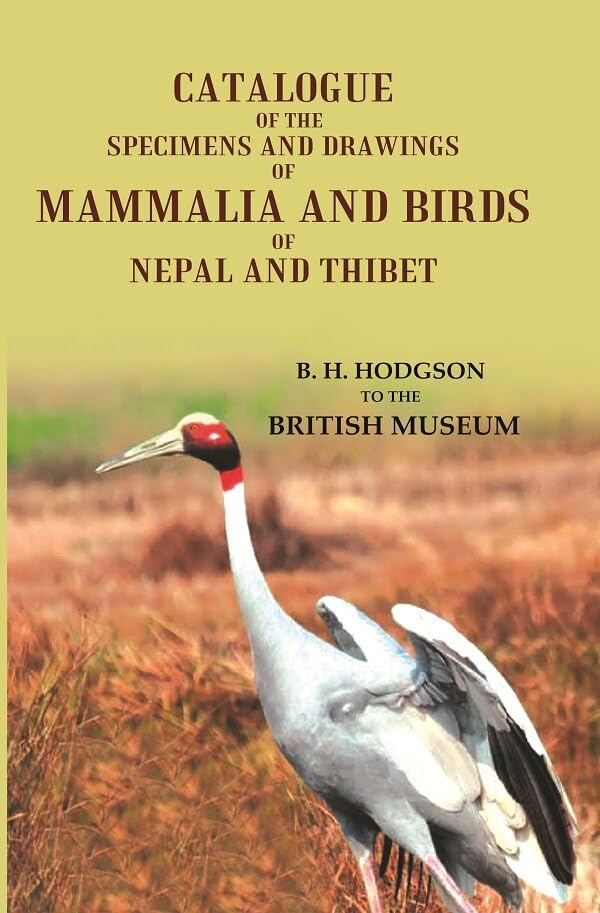
This meticulously compiled catalogue offers a fascinating window into the biodiversity of Nepal and Tibet through detailed specimens and illustrations of mammals and birds. Perfect for natural history enthusiasts, zoologists, wildlife students, and collectors of historical scientific documentation, this 172-page volume serves as both a reference work and an appreciation of 19th-20th century naturalist traditions. Whether you’re researching Himalayan wildlife, studying historical zoological methods, or simply captivated by the artistic beauty of scientific illustration, this catalogue provides an authentic record of the region’s fauna that remains valuable to researchers and curious readers alike.
- Reading age: 12 years and up
- Print length: 172 pages
- Language: English
- Dimensions: 21.59 x 13.34 x 1.2 cm
- Publisher: Gyan Publishing House
- Publication date: 1 January 2024
- ISBN-10: 9362809397
- ISBN-13: 978-9362809391
Frequently Asked Questions
What animals are covered in this catalogue of Nepal and Tibet?
This catalogue presents a comprehensive collection of mammals and birds indigenous to Nepal and Tibet. It includes detailed specimens and drawings that document the zoological diversity of the Himalayan region, making it valuable for anyone studying Himalayan wildlife or natural history.
Is this book suitable for students interested in zoology and natural history?
Yes, absolutely. With 172 pages of detailed illustrations and specimen documentation, this book is ideal for zoology students, natural history researchers, and wildlife enthusiasts aged 12 and up. It serves as an excellent reference for understanding historical zoological methods and Himalayan fauna.
Can I buy this catalogue of Nepal and Tibet wildlife online in India?
Yes, you can buy this catalogue online through The Bookish Owl. We deliver across India. It’s a great addition to personal collections, libraries, and educational institutions studying natural history and regional biodiversity.
What is the reading age and format of this specimens catalogue?
Recommended for ages 12 and up, this is a 172-page English-language reference work published by Gyan Publishing House in 2024. Its format combines historical zoological documentation with detailed drawings, suitable for both academic and recreational reading.
Why should I read this historical wildlife catalogue?
This catalogue captures the scientific and artistic traditions of 19th-20th century naturalism, offering insights into Himalayan biodiversity that remain relevant to modern researchers. It’s perfect for collectors of historical scientific texts, wildlife enthusiasts, and anyone fascinated by the intersection of art and zoological documentation.