Description
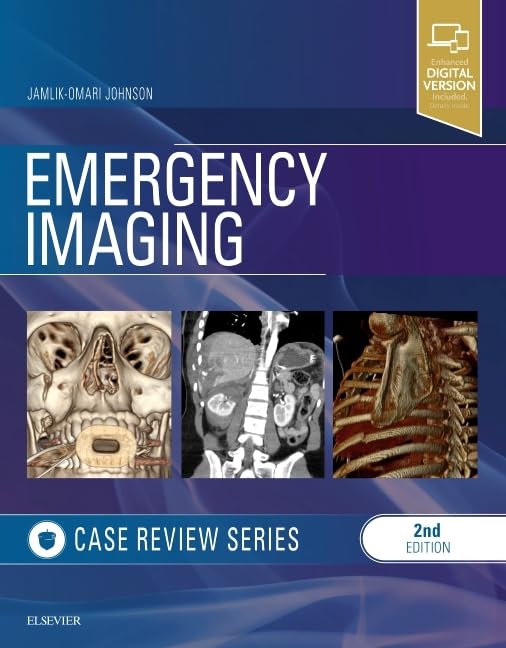
This is the go-to case review book for anyone preparing for emergency radiology exams or clinical practice. The second edition of Emergency Imaging presents 200+ high-yield cases organized by anatomical region and pathology, each with high-quality imaging and detailed explanations. Perfect for medical students, residents preparing for board exams, and practicing radiologists looking to sharpen their diagnostic skills. The Case Review format makes self-assessment painless and helps you identify knowledge gaps quickly. Whether you’re studying for USMLE, radiology specialty exams, or just want to master emergency imaging patterns, this book delivers real cases with real clinical relevance.
- ISBN-10: 0323428754
- ISBN-13: 978-0323428750
- Edition: 2nd
- Publisher: Elsevier
- Publication date: 5 August 2019
- Part of series: Case Review
- Language: English
- Dimensions: 20.96 x 1.27 x 26.67 cm
- Print length: 256 pages
Frequently Asked Questions
Is Emergency Imaging Case Review Series good for USMLE and medical board exam preparation?
Yes, absolutely. This book is specifically designed for board exam prep and covers high-yield emergency imaging cases that frequently appear in USMLE Step 3, radiology board exams, and clinical practice. Each case includes image interpretation, differential diagnosis, and clinical pearls to reinforce learning.
What’s the difference between the 1st and 2nd edition of Emergency Imaging?
The 2nd edition (2019) features updated imaging cases, improved image quality, and refined explanations based on the latest radiology guidelines. It reflects current clinical practice and diagnostic standards while maintaining the proven case-based learning format.
Who should read Emergency Imaging Case Review Series?
Medical students, radiology residents, emergency medicine residents, emergency physicians, and practicing radiologists. Anyone involved in interpreting emergency imaging—from trauma to acute abdomen to neurological emergencies—will find this invaluable.
Can I use this book for self-study and self-assessment?
Definitely. The Case Review format is designed for self-paced learning with cases presented first, then answers. It’s ideal for identifying your weak areas and building pattern recognition skills before seeing each case’s diagnosis.
Does this book cover all types of emergency imaging?
Yes, it covers a broad range: trauma imaging, acute abdomen, neurological emergencies, thoracic emergencies, and more. With 200+ diverse cases, you’ll encounter common and uncommon presentations across multiple anatomical systems.