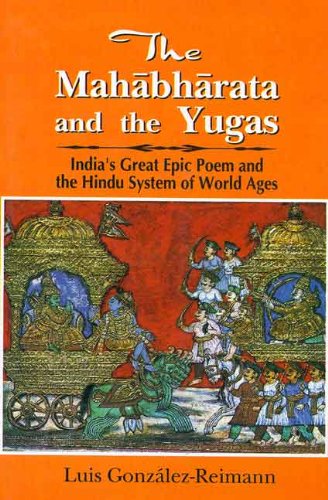
Description
This scholarly exploration bridges India’s greatest epic with one of Hinduism’s most profound cosmological concepts—the four yugas or world ages. The Mahabharata isn’t just a story of warring cousins; it’s a text deeply embedded in cyclical time, where the transition from Dvapara to Kali Yuga shapes the entire narrative. This hardcover edition from Motilal Banarsidass offers readers a detailed examination of how the epic poem reflects and reinforces Hindu understanding of cosmic time cycles. Perfect for students of Indology, Hindu philosophy enthusiasts, and anyone seeking to understand the Mahabharata beyond its surface narrative, this 312-page volume connects mythology with metaphysics. Whether you’re researching ancient Indian cosmology or deepening your appreciation of Sanskrit literature, this book provides scholarly yet accessible insights into how epic poetry and philosophical systems intertwine in the Hindu tradition. A valuable addition to any serious collection on Indian epics or Hindu thought.
- Publisher : Motilal Banarsidass Publishers (1 January 2010)
- Language : English
- Hardcover : 312 pages
- ISBN-10 : 8120834844
- ISBN-13 : 978-8120834842
- Item Weight : 500 g
- Country of Origin : India
Frequently Asked Questions
What is the connection between the Mahabharata and the Yugas?
The Mahabharata is set during the transition from Dvapara Yuga to Kali Yuga, the current age of decline in Hindu cosmology. This book examines how the epic reflects this cosmic shift and how the yuga system—comprising Satya, Treta, Dvapara, and Kali yugas—shapes the narrative and moral framework of India’s greatest epic poem.
Who should read this book on Mahabharata and Hindu world ages?
This scholarly work is ideal for students of Indology, Hindu philosophy, Sanskrit literature, and comparative religion. It’s also valuable for serious readers who want to understand the cosmological and philosophical dimensions of the Mahabharata beyond the story itself, exploring how ancient Indian thought viewed time and cosmic cycles.
Is this book available in hardcover in India?
Yes, this is a 312-page hardcover edition published by Motilal Banarsidass, one of India’s most respected publishers of Indological works. It’s available for online purchase in India at ₹495 and is in stock for immediate delivery.
What are the four yugas explained in Hindu cosmology?
The four yugas are Satya Yuga (the golden age), Treta Yuga, Dvapara Yuga, and Kali Yuga (the current age). This book explains how these cyclical world ages form the cosmological backdrop of the Mahabharata and represent progressive stages of moral and spiritual decline before renewal, a fundamental concept in Hindu understanding of time.
How does this book differ from regular Mahabharata translations?
Unlike narrative translations or retellings, this is a scholarly analysis focusing specifically on the relationship between the epic and Hindu cosmological systems. It examines the philosophical and metaphysical dimensions of how the Mahabharata reflects the yuga theory, making it an academic companion rather than a story version.