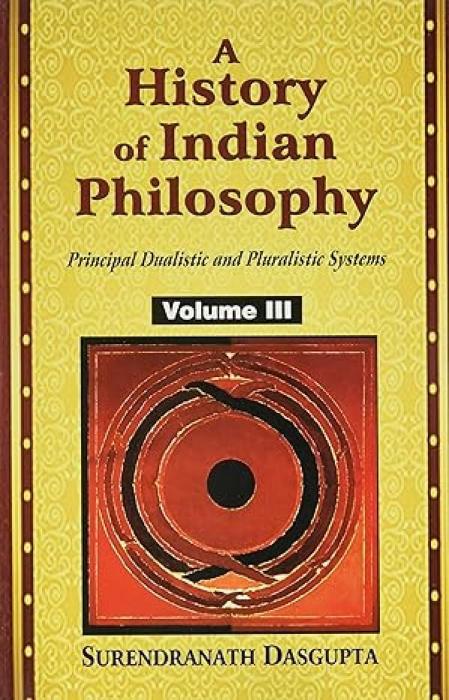
Description
Volume 3 of Surendranath Dasgupta’s magisterial five-volume series stands as an indispensable reference for anyone studying the dualistic and pluralistic traditions of Indian thought. This volume meticulously examines the Nyaya and Vaisesika schools, exploring their epistemology, metaphysics, and logical frameworks with scholarly rigor. Dasgupta’s ability to present complex philosophical arguments with clarity makes this work accessible to serious students while maintaining the depth required by researchers and academics. Originally published in the early 20th century, this text remains the most comprehensive English-language treatment of these systems. For MA and PhD students of Indian philosophy, comparative religion, or South Asian studies, this volume is not just recommended—it’s essential. The Motilal Banarsidass edition preserves the integrity of Dasgupta’s original scholarship while making it available to contemporary readers. Whether you’re examining the atomistic theories of Vaisesika or the inference methods of Nyaya, this authoritative work provides the foundation every philosophy library needs.
- Publisher : Motilal Banarsidass Publishers; 5th Reprint edition (1 January 2015)
- Language : English
- Paperback : 627 pages
- ISBN-10 : 8120804147
- ISBN-13 : 978-8120804142
- Item Weight : 640 g
- Dimensions : 14 x 3 x 22 cm
- Country of Origin : India
Frequently Asked Questions
What does Volume 3 of Dasgupta’s History of Indian Philosophy cover?
This volume focuses on the principal dualistic and pluralistic systems of Indian philosophy, primarily the Nyaya and Vaisesika schools. It provides detailed analysis of their epistemology, logic, atomistic theories, and metaphysical frameworks with comprehensive scholarly treatment.
Is Dasgupta’s History of Indian Philosophy good for MA students?
Yes, this is considered the definitive English-language reference for graduate-level study of Indian philosophy. MA and PhD students across India rely on Dasgupta’s series for its thorough coverage, rigorous scholarship, and clear presentation of complex philosophical concepts.
Do I need to read Volume 1 and 2 before reading Volume 3?
While each volume can stand alone as they cover different philosophical systems, reading the earlier volumes provides helpful context. Volume 3 focuses specifically on dualistic and pluralistic systems, so you can start here if that’s your area of interest.
Who was Surendranath Dasgupta and why is his work authoritative?
Surendranath Dasgupta (1887-1952) was a renowned Indian philosopher and scholar who studied at Cambridge. His five-volume History of Indian Philosophy remains the most comprehensive and scholarly treatment of Indian philosophical systems in English, widely cited by academics worldwide.
Is this the complete book or an abridged version?
This is the complete, unabridged 5th reprint edition from Motilal Banarsidass with all 627 pages. It preserves Dasgupta’s original comprehensive scholarship and includes full treatment of Nyaya, Vaisesika, and related dualistic and pluralistic systems.

![The Study of Patanjali [Hardcover]](https://thebookishowl.in/wp-content/uploads/2025/12/692f40ea27f438271-600x940.jpg)