Description
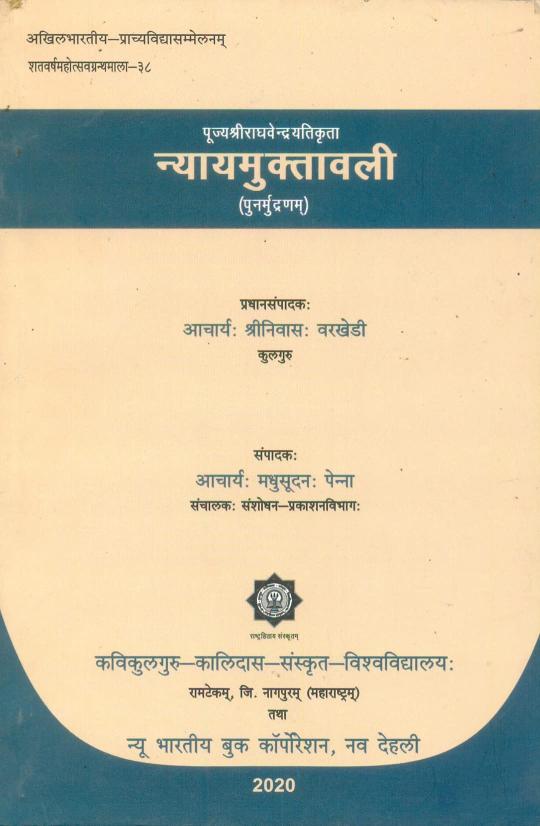
The Nayayamuktavalli stands as a masterwork of Sanskrit logical philosophy, offering readers deep insights into classical Indian epistemology and reasoning systems. This 280-page scholarly text presents the foundations of Nyaya philosophy in elegant Sanskrit, making it essential for students of classical Indian thought, Sanskrit scholars, and philosophy enthusiasts. Whether you’re researching traditional Indian logic, preparing for advanced Sanskrit studies, or exploring Hindu philosophical traditions, this New Bahratiya Book Corporation edition provides an authoritative, accessible exploration of one of India’s most influential intellectual traditions. A must-have for anyone serious about understanding the intellectual heritage of Indian civilization.
- Publisher : New Bahratiya Book Corporation (1 January 2020)
- Language : Sanskrit
- Paperback : 280 pages
- ISBN-10 : 8183154166
- ISBN-13 : 978-8183154161
Frequently Asked Questions
What is Nayayamuktavalli about?
Nayayamuktavalli is a classical Sanskrit text that explores the principles of Nyaya logic and Indian epistemology. It serves as a comprehensive guide to understanding how knowledge is acquired and validated according to classical Indian philosophical traditions.
Is this book suitable for Sanskrit learners?
Yes, while it’s an advanced text, this edition from New Bahratiya Book Corporation is well-suited for intermediate to advanced Sanskrit students and scholars. It’s ideal for those pursuing serious study of classical Sanskrit literature and philosophy.
Can I buy Nayayamuktavalli online in India?
Absolutely! You can order this Sanskrit philosophy book online from The Bookish Owl with home delivery across India. It’s available in paperback format at an affordable price.
How many pages does this book have?
This edition of Nayayamuktavalli contains 280 pages, providing comprehensive coverage of Sanskrit logical philosophy in a manageable format for serious readers and researchers.
Who should read Nayayamuktavalli?
This book is ideal for Sanskrit scholars, philosophy students, researchers of Indian intellectual traditions, and anyone interested in classical logic systems and epistemology. It’s particularly valuable for those studying Hindu philosophy and traditional Indian knowledge systems.